
Opening sample
They're missing life.
At tables all over the country, children are physically present and somewhere else entirely. The phone is not merely occupying a quiet minute. It is competing with the conversation, the boredom, the small improvisations, and the look across the table that make childhood feel inhabited.
I am probably not who you expect to write this. I have spent my career inside technology, building software and working with artificial intelligence. I am a lifelong gamer. Our family loves movie nights. I do not think screens are evil, and this is not a guilt trip for parents who handed over a tablet because dinner needed to happen.
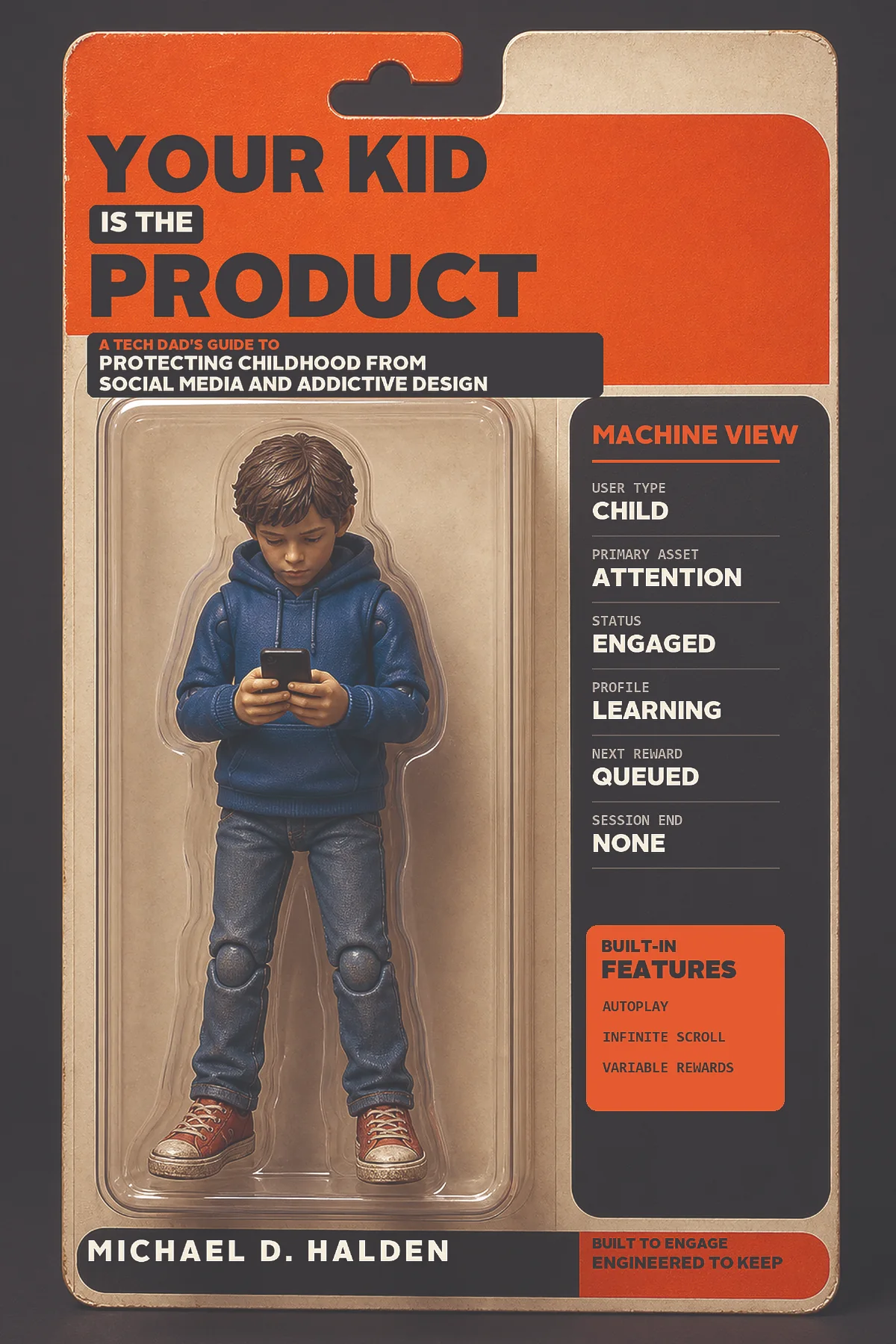
The problem is not the existence of a screen. The problem is the business model behind the systems that never end: autoplay, infinite scroll, recommendations, streaks, variable rewards, and a stream tuned to keep a person engaged for the next moment. When the user is a child, the product being sold is that child's attention.
The line does not run between screens and no screens. It runs between intentional technology and extractive technology.
Parents do not need a perfect formula. We need a durable lens, age-appropriate boundaries, and a relationship strong enough that our kids still come to us when something goes wrong. That is why the order matters: stay involved, then lock it down. Controls are the backstop. Presence is the fix.
Screens do not raise kids. You do. The rest of the book is how.
Use the three-question test, choose the age you are parenting now, or begin the eight-step family reset.